34% of Patients Let AI Choose Their Doctor. Here’s What That Means for You.
AI tools now influence physician selection at the same rate as primary care referrals. The doctors who understand this will grow. The rest will wonder where their patients went.

34%. That’s the percentage of patients who say AI tools directly influenced which doctor they chose in 2025.
36%. That’s the percentage influenced by their primary care physician’s referral.
Read those numbers again.
The referral network you spent two decades building now competes with ChatGPT. And ChatGPT doesn’t owe you any favors.
IN TODAY’S ARTICLE:
The data on how patients actually find physicians in 2025 (not how you think they do)
Why AI now matches PCP referrals in influence, and what that means for independent practices
The 4-star floor, the 48-hour window, and the 25% walkaway rate that determine whether patients call
What this series will teach you and why I’m giving away the entire playbook
Glossary at the bottom of today’s article.
🎧 Audio version available below.
THE OLD PLAYBOOK IS DEAD
You learned how to build a practice a certain way.
Get to know the PCPs in your area. Build relationships. Deliver good outcomes. Word spreads. Referrals follow.
That playbook worked for decades.
It still matters.
But it’s no longer enough.
Here’s the data:
77% of patients now use online search before booking appointments. Not after. Before. They’ve already researched you, your practice, your reviews, and your competitors by the time they call.
And that’s just the beginning.
42% of patients now use generative AI tools like ChatGPT and Google AI Overviews to research and compare doctors. Not “might use someday.” Use now. As of 2025.
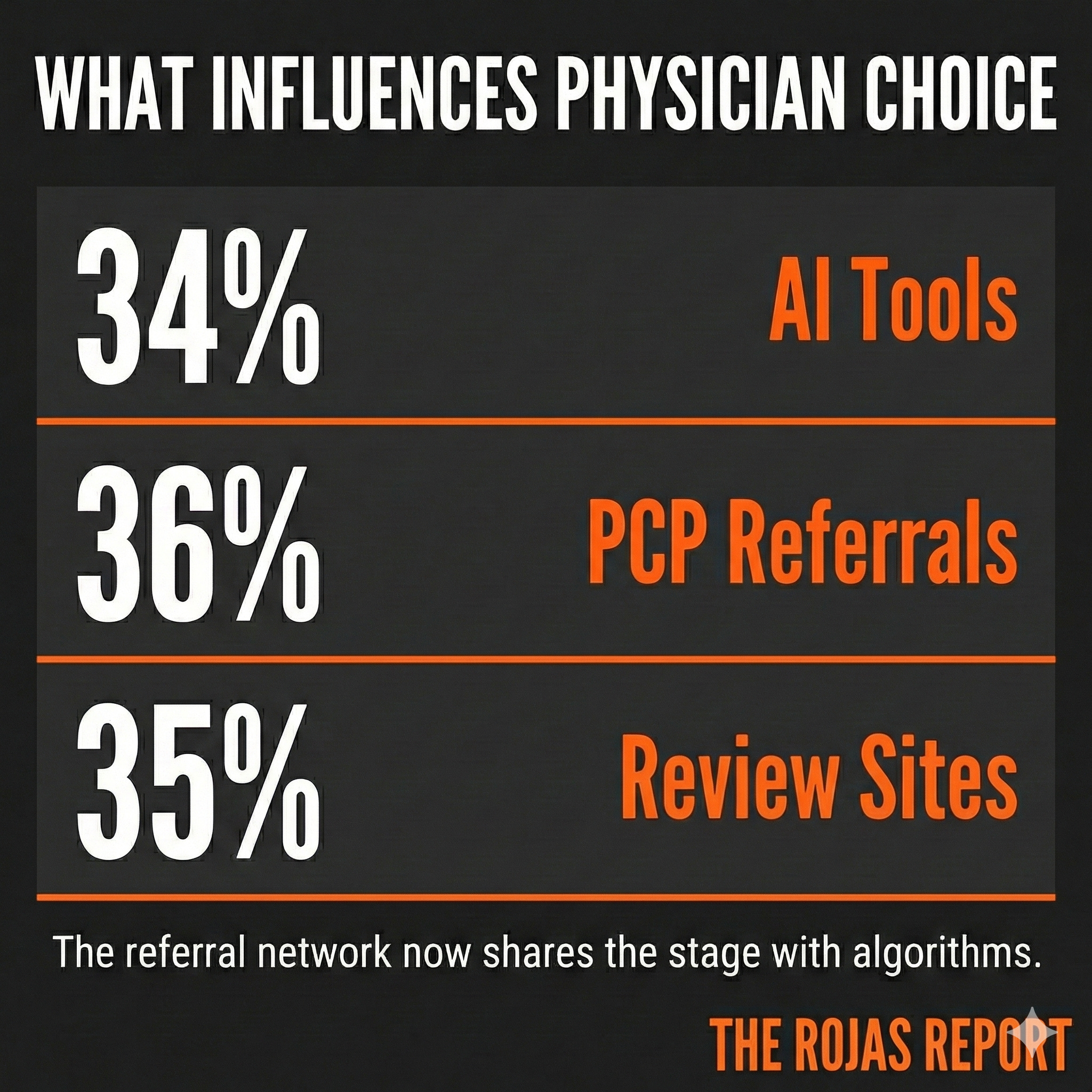
34% said AI directly influenced which physician they chose.
For context: 36% said their PCP’s referral influenced their choice. 35% said healthcare review sites.
AI. PCP referrals. Review sites. All roughly equal in influence.
The referral network you spent 20 years building now shares the stage with algorithms that didn’t exist two years ago.
THE 77% PROBLEM
Let’s stay with that 77% number.
77% of patients research physicians online before booking. That means for every 10 potential patients who might call your practice, roughly 8 of them have already made a preliminary judgment based on what they found online.
What are they looking at?
Google. 46% of patients use Google to find a new physician. Another 46% check their insurance directory online, often discovered through the same Google search. 5% of all Google searches are health-related. Search drives 3x more visitors to healthcare websites than any other source.
Reviews. 84-94% of patients consult online reviews before choosing a physician. 51% read at least 6 reviews before deciding. 23% read 20 or more.
Your bio. 92% of patients read a clinician’s bio before booking. 77% rely on visual cues like professional headshots to build confidence.
Online scheduling. 80% of patients say online scheduling influences their choice. 43% prefer to book online rather than calling. And here’s the number that matters most: 25% will walk away if online scheduling is not available.
One in four potential patients. Gone. Because they couldn’t book online.
That’s not a preference. That’s a filter. If you don’t have online scheduling, you’re invisible to a quarter of the market before they even evaluate your clinical skills.
You’re already spending money to acquire patients. You’re just spending it on the wrong things. Paid Subscribers get the playbook that redirects that budget to what actually works.
THE 4-STAR FLOOR
Reviews aren’t just important. They’re gatekeepers.
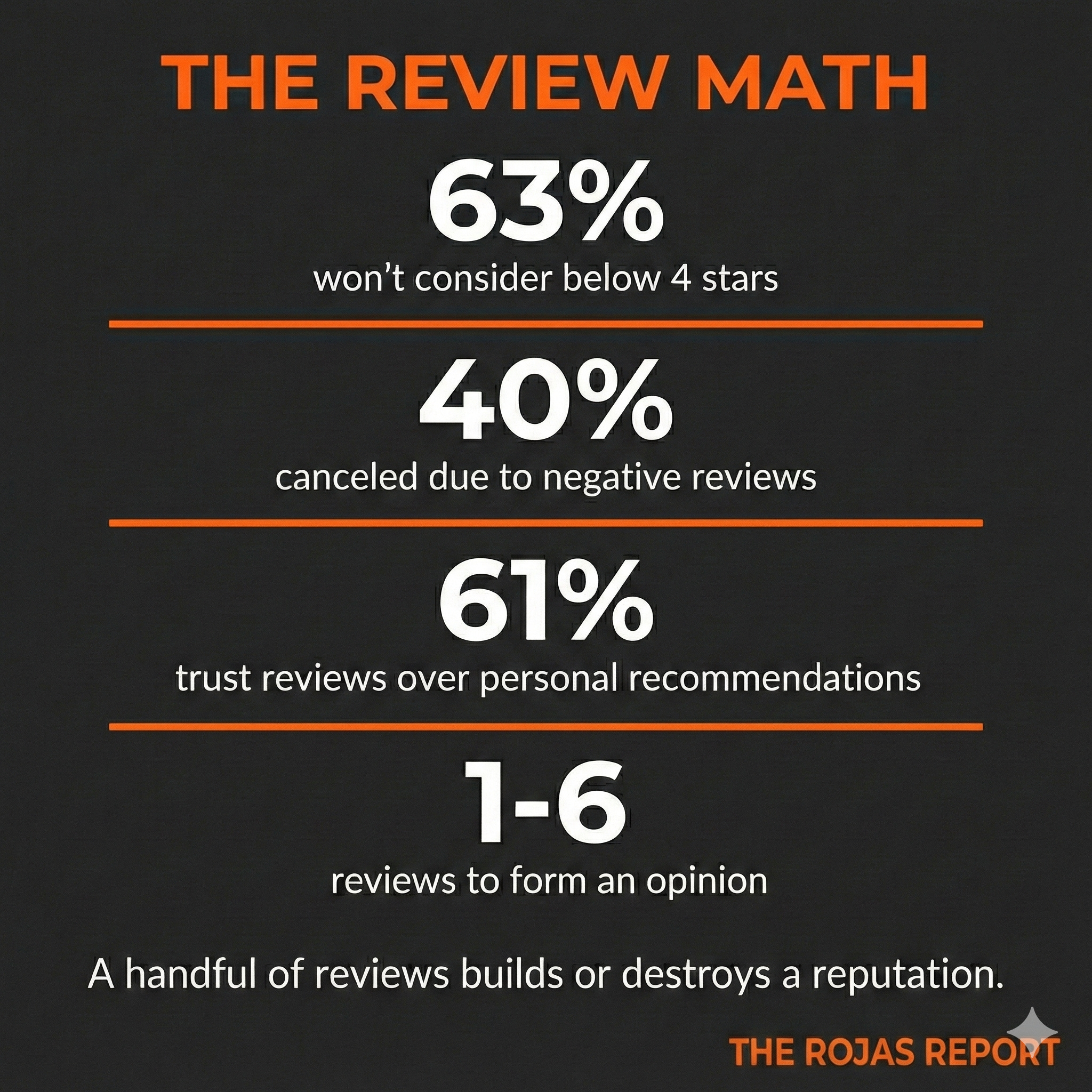
63% of patients won’t even consider a physician with less than 4 stars.
Read that again. Not “prefer 4 stars.” Won’t consider anything below it.
If your Google rating is 3.8, you’re not competing for 63% of the market. You’re filtered out before the competition begins.
The data gets worse:
40% of patients have canceled or avoided booking an appointment entirely due to negative reviews. 61% said personal recommendations would not sway their decision if they encountered negative reviews online.
Your colleague refers a patient to you. The patient Googles you. They see three negative reviews about wait times and staff rudeness. They don’t call.
The referral didn’t fail because of clinical quality.
It failed because of reputation infrastructure.
And here’s what most physicians miss: it only takes 1-6 reviews for patients to form an opinion about a practice. Not 50. Not 100. Six.
A handful of negative reviews can poison a reputation.
A handful of positive reviews can build one.
The practices that understand this are systematically generating positive reviews. The practices that don’t are losing patients to those that do.