

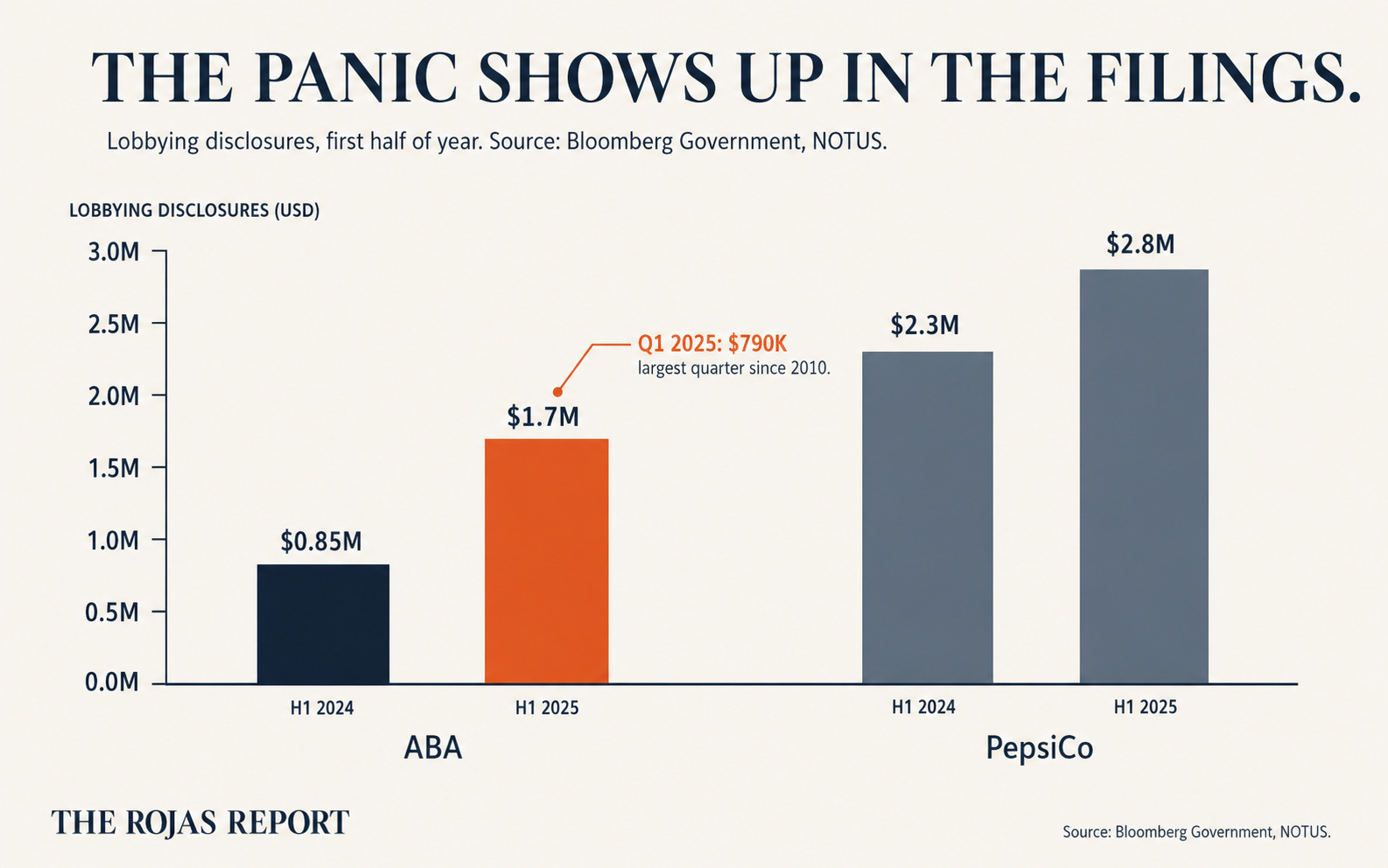
In the first three months of 2025, the American Beverage Association spent $790,000 on lobbying.
Its biggest quarter since 2010.
By June, the total hit $1.7 million. More than double the prior year’s pace. More than the group spent in any full year but one since 2010.
PepsiCo disclosed $2.8 million of its own, with SNAP “purchasing restrictions” named in the filings.
Trade associations spend like that when something valuable is on the table.
Here is what was on the table: the right to keep selling soda to the United States Treasury.
IN TODAY’S ARTICLE:
The USDA’s own data: soft drinks were the single largest commodity SNAP households bought, and taxpayers covered $2 billion to $4 billion of soda a year
Minnesota, New York, and Maine all asked to stop it. Three administrations from both parties said no.
The lobbying disclosures behind the no: PAC money to the House Agriculture Committee and record ABA spending the moment the waivers started clearing
A federal judge, a Farm Bill amendment, and the fight that decides whether the subsidy survives
Glossary at the bottom of today’s article.
THE PRODUCT LINE IN THE FEDERAL BUDGET
Article 1 of this series showed you the tape: nine of ten food giants repriced while the S&P ran. This article shows you the machinery behind the piece of that repricing the industry fears most.
Start with the government’s own receipts.
The USDA’s 2016 purchase study found soft drinks were the number one commodity SNAP households bought. The broader sweetened-beverage category took 9.3 cents of every SNAP grocery dollar, second only to meat, poultry, and seafood. Researchers put the taxpayer-funded soda tab at $2 billion to $4 billion a year.
SNAP moved $99.8 billion in fiscal 2024 across 41 million Americans. Soda companies booked their slice of it as ordinary revenue. It rang up as a sale, so it never got called a subsidy.
The lobbying disclosures get filed months before the headlines get written. 100,000 physicians, healthcare executives, and lawmakers read The Rojas Report because this is where the filings get read first.
