
EMTALA Is Not Charity. It Is the Cover Story.

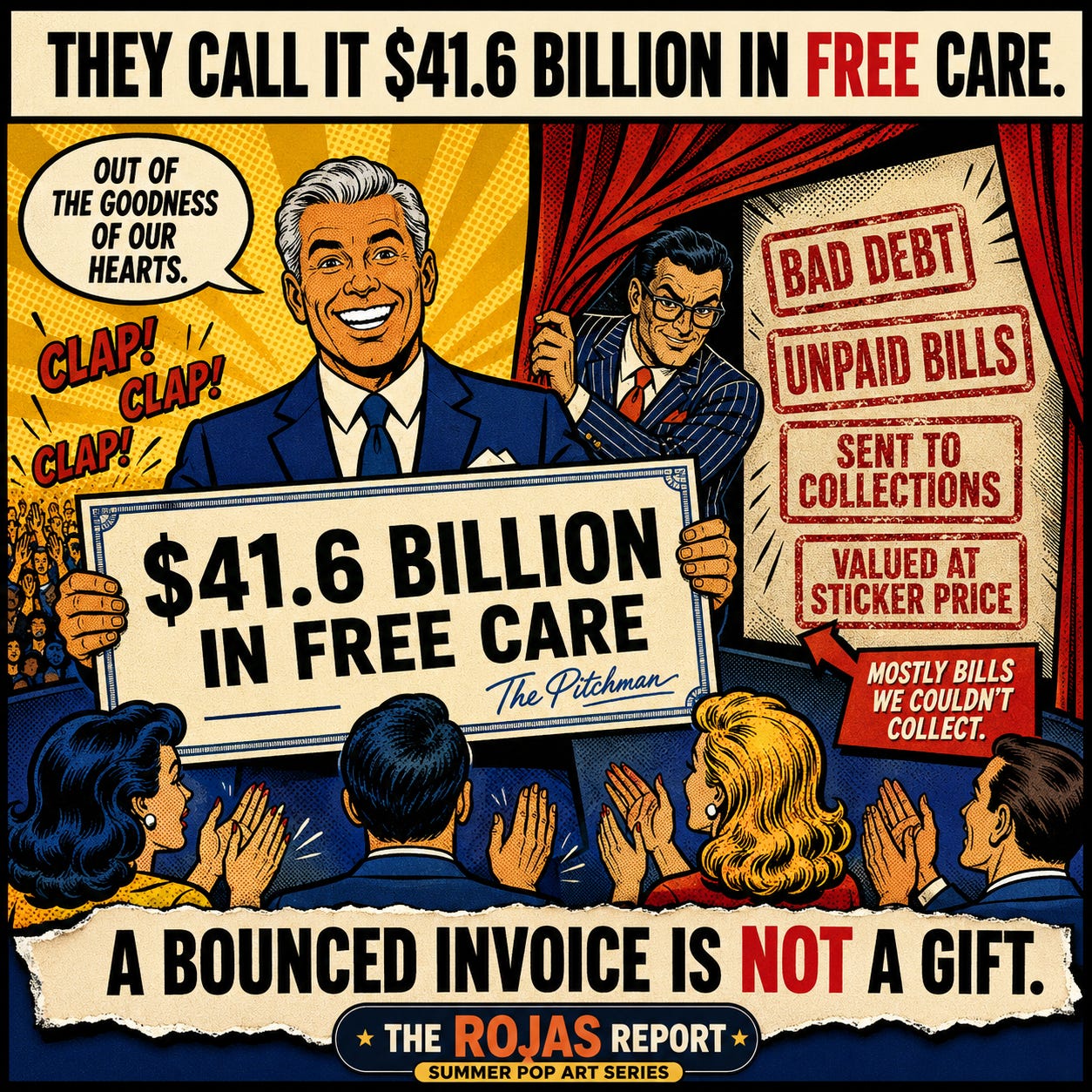
Hospitals say they gave away 41.6 billion dollars in free care in a single year. They say it adds up to 745 billion since 2000. They put the number on fact sheets and hand it to Congress.
Read the footnote.
Most of that number is bad debt.
Bad debt is the industry’s word for a bill they sent, expected to collect, and could not. They valued it at sticker price, wrote it down as a gift, and, in hundreds of thousands of cases, sued the patient to collect it anyway.That is not charity.
That is a failed collection counted as a gift.
IN TODAY’S ARTICLE:
The hospital industry’s headline “free care” number is mostly bad debt and unpaid bills, valued at a sticker price nobody actually pays.
The industry calls EMTALA an unfunded sacrifice. It funds tax exemptions, federal supplemental checks, and a rate multiplier for everyone with insurance.
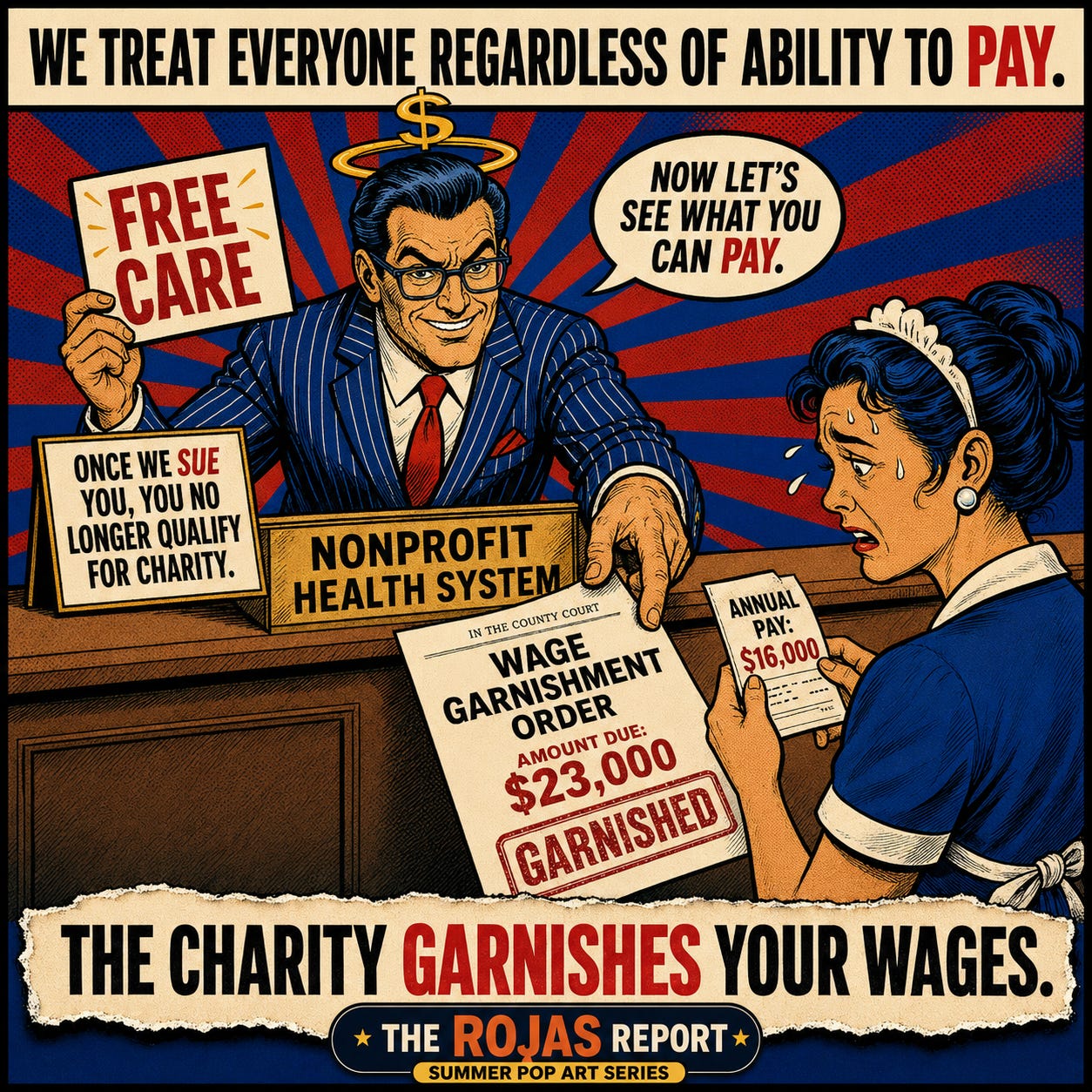
“We treat everyone regardless of ability to pay” is followed by two years of finding out exactly how much you can pay, including wage garnishment.
“Before EMTALA people died in the streets” is the bludgeon they swing to keep the subsidy and ban the competition.
Glossary at the bottom of today’s article.
THE NUMBER THEY WAVE
That number comes from the American Hospital Association, and it arrives whenever a hospital wants a tax break protected, a competitor blocked, or a rate increase justified.
The other half of it is financial assistance, the care a hospital agrees up front to give for free. Bad debt is the amount they pursued and lost. Neither half is the medicine-out-of-conscience the headline implies.
And the dollar figure starts at sticker price. The hospital takes its billed amounts, the fictional chargemaster prices only the powerless actually pay, and only then multiplies by a ratio to bring it back toward cost. The headline you are handed is built from the most inflated prices in the building.
So the 41.6 billion is not 41.6 billion in free medicine.
It is a pile of unpaid bills and write-downs, much of it pursued in court, dressed up as the industry’s heart.
THE BILL COMES ANYWAY
“We treat everyone regardless of ability to pay.” True. What they leave off is the second half. They treat you regardless of ability to pay, then they spend the next two years finding out exactly how much you can pay.
A national investigation by KFF Health News pulled the billing policies of more than 500 hospitals. More than two-thirds reserve the right to sue patients, garnish wages, or put liens on homes. Among them, the Mayo Clinic.
Look at one system up close. Methodist Le Bonheur in Memphis filed more than 8,300 lawsuits against patients in five years, and dozens of those targeted its own employees. It won wage garnishment orders in 46 percent of its cases.
Only 1 percent of the patients it chased for past-due bills received financial assistance. One of them, Carrie Barrett, made about 9 dollars an hour at Kroger. Methodist sued her over a 12,000-dollar bill that grew past 33,000 with interest and fees, and garnished her paycheck 15 times.
That same hospital reports more than $ 226 million in community benefit and holds a federal tax exemption as a charity.
The University of Virginia’s health system sued patients more than 36,000 times in six years, chasing 106 million dollars, while running the most restrictive financial-assistance policy of any major system in the state.
This is what “free care” looks like from the only seat that matters.
The one holding the summons.
They treat you regardless of ability to pay, then spend two years finding out how much you can pay. The 100,000 physicians, healthcare executives, and lawmakers who read The Rojas Report already know which number the hospital is really chasing. Subscribe.
