
Four People Control Whether Physician Payment Reform Lives or Dies. Here’s What They Were Paid.
The hospital industry does not fund candidates. It funds positions. The distinction is what makes the architecture unbreakable.

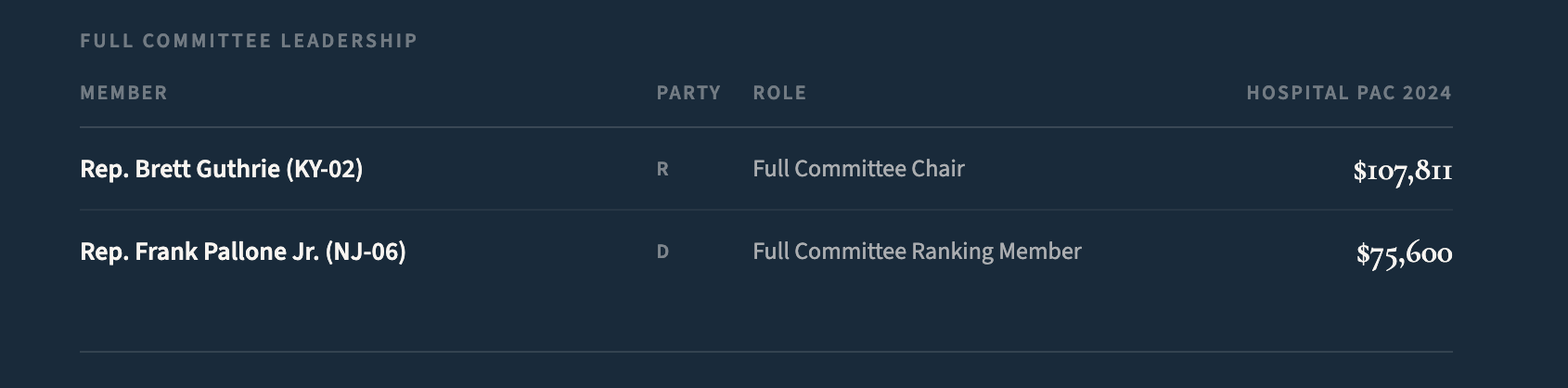
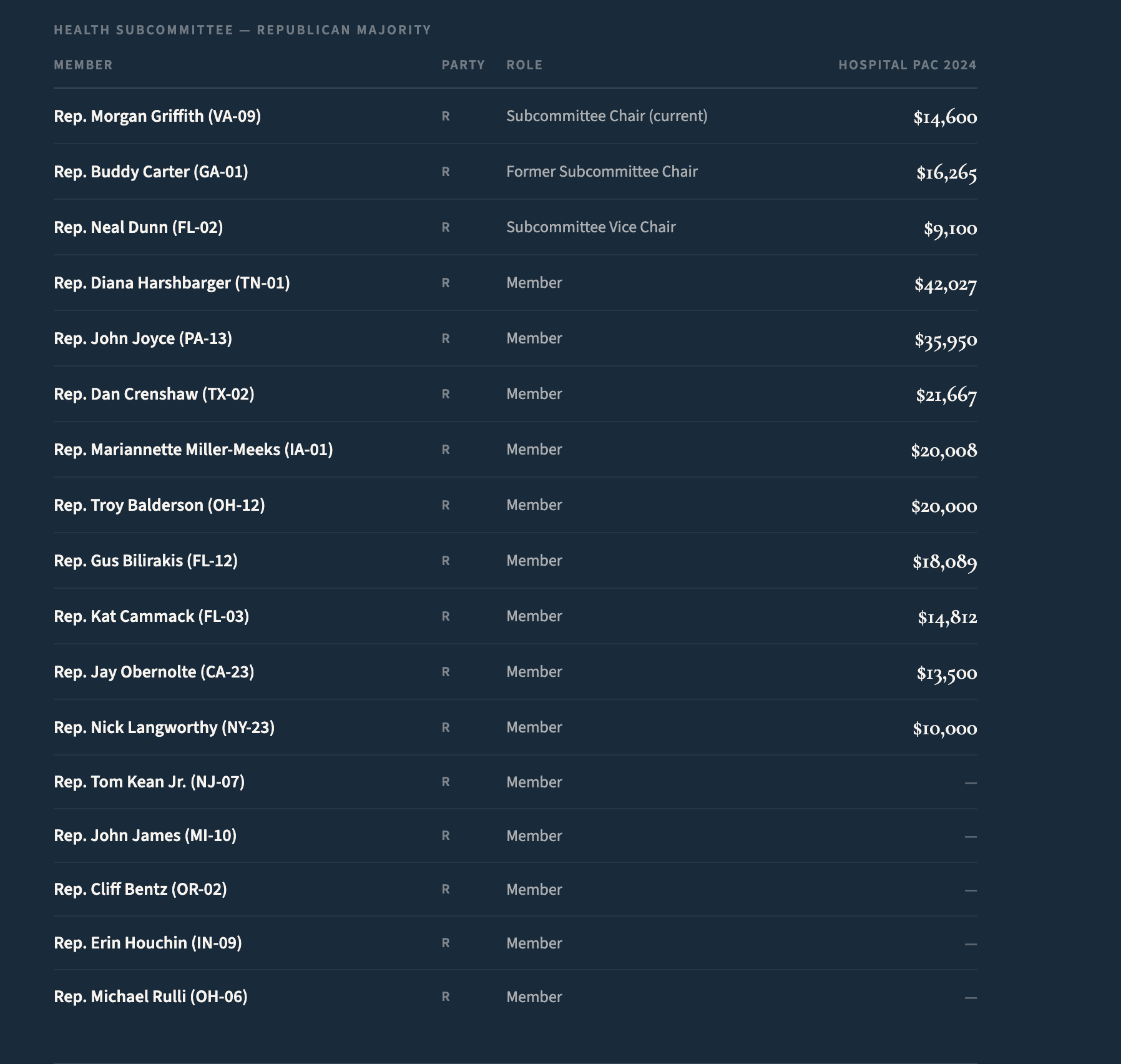
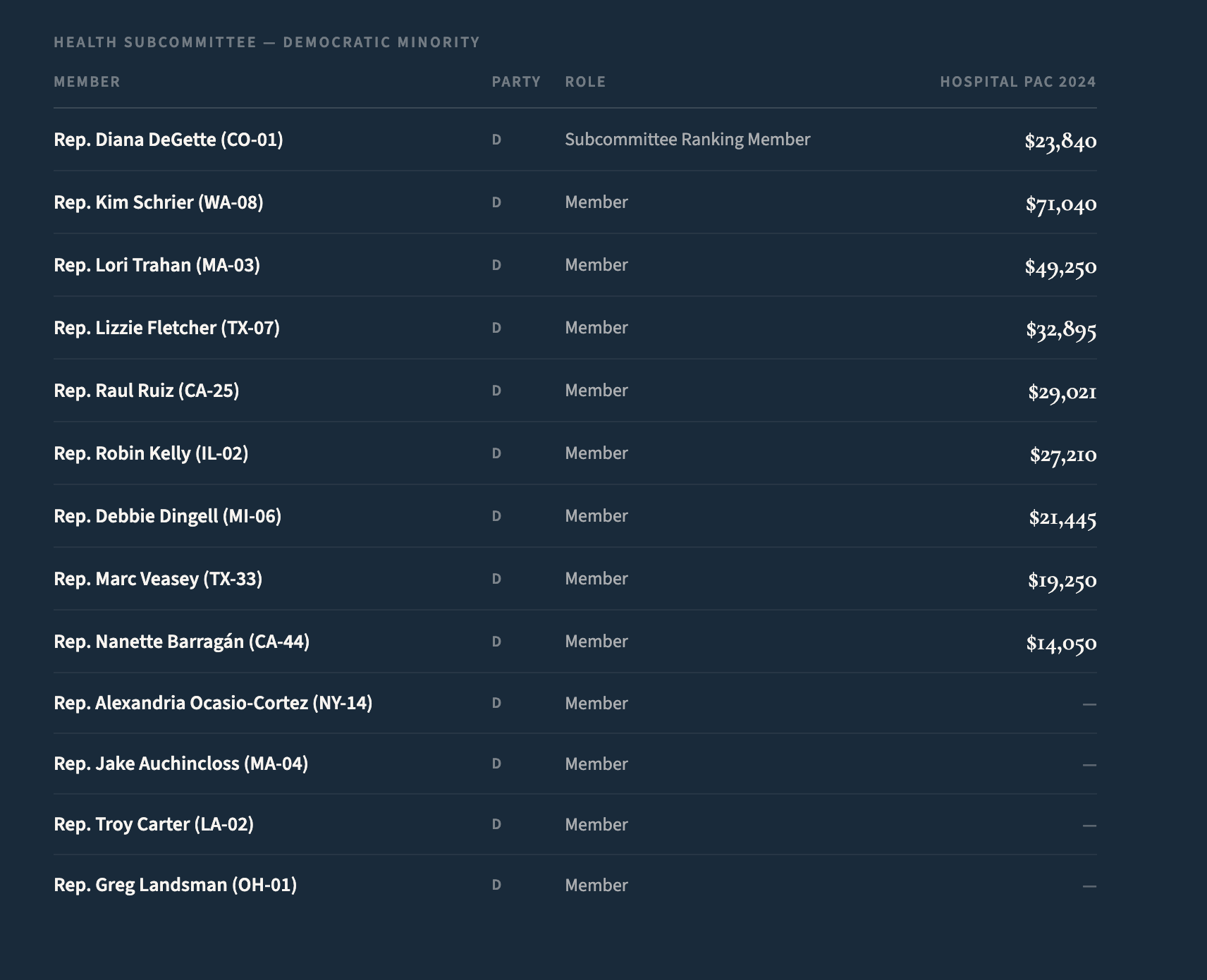
Members of the Energy and Commerce Committee receive 8.2 times more money from the hospital industry than every other House member.
That is not a coincidence.
That is a controlled chokepoint.
IN TODAY’S ARTICLE:
Why the health system industry concentrates 8.2 times more money into one committee than anywhere else in Congress
The two-committee architecture that kills reform before it reaches a floor vote
Every dollar amount, by member, by committee, by name
Why a partisan funding pattern can be disrupted by an election, and a positional one cannot
Glossary at the bottom of today’s article.
WHY NO LEGISLATURE HAS MOVED
The gap is documented.
The architecture is visible.
The question is: why has no legislature dismantled it?
The answer is in the committee structure. In the United States House of Representatives, structural reform to hospital payment does not pass through a single committee. It goes through two.
The Energy and Commerce Committee controls the regulatory and programmatic architecture: price transparency rules, the 340B program, hospital consolidation oversight, and the structure of the Outpatient Prospective Payment System.
The Ways and Means Committee controls the payment machinery: Title XVIII of the Social Security Act, the physician fee schedule conversion factor, the hospital inpatient DRG rates, Medicare Part A and Part B financing, and the nonprofit tax exemption that shields $37.4 billion in annual hospital revenue, according to a 2024 study published in the Journal of the American Medical Association analyzing 2021 Medicare Cost Report data.
Any structural reform to how hospitals and physicians are paid must clear both committees. The hospital industry and its lobbyists have invested accordingly in both.
ENERGY AND COMMERCE: THE FIRST CHOKEPOINT
Within the E&C Committee, the Health Subcommittee is the chokepoint.
A bill to reform the CMS fee schedule starts there. A bill to impose disclosure requirements on 340B revenue starts there. A bill to repeal Section 6001 and allow new physician-owned hospitals starts there. A bill to mandate site-neutral payment starts there. The subcommittee chair decides whether a bill gets a hearing. If it does not get a hearing, it does not get a markup. If it does not get a markup, it does not reach the floor.
During the 2024 election cycle, the hospital and nursing home industry contributed $9,430,676 to members of the Energy and Commerce Committee.
The average contribution to an E&C member was $181,359. The average contribution to all other House members was $22,034.
Members of the Energy and Commerce Committee receive 8.2 times more money from the hospital industry than their peers in the rest of the House.
That ratio is not a modest premium. It is an 8.2x concentration of funds from a single industry into the single committee that regulates that industry. The industry directs the funds at the bottleneck.
The full picture:

Everyone has a theory about why healthcare reform fails.
This is the org chart.
The names are on it.
The dollar amounts are next to the names.
Keep reading with a 7-day free trial
Subscribe to The Rojas Report to keep reading this post and get 7 days of free access to the full post archives.