

Drs. Slosar and Kella, of The PhyCap Fund reframe what it means to be a physician in the investment world. Instead of limiting influence to the clinic, they argue that healthcare professionals bring a perspective no MBA can match: firsthand understanding of patients, care delivery, and the system’s inefficiencies.
By expanding beyond physicians to include all healthcare professionals, and by targeting investments that truly impact doctors and patients, the future of venture capital in healthcare can be reshaped around lived expertise, not just spreadsheets.
Learn more about investing in healthcare startups here: Invest in Healthcare Startups
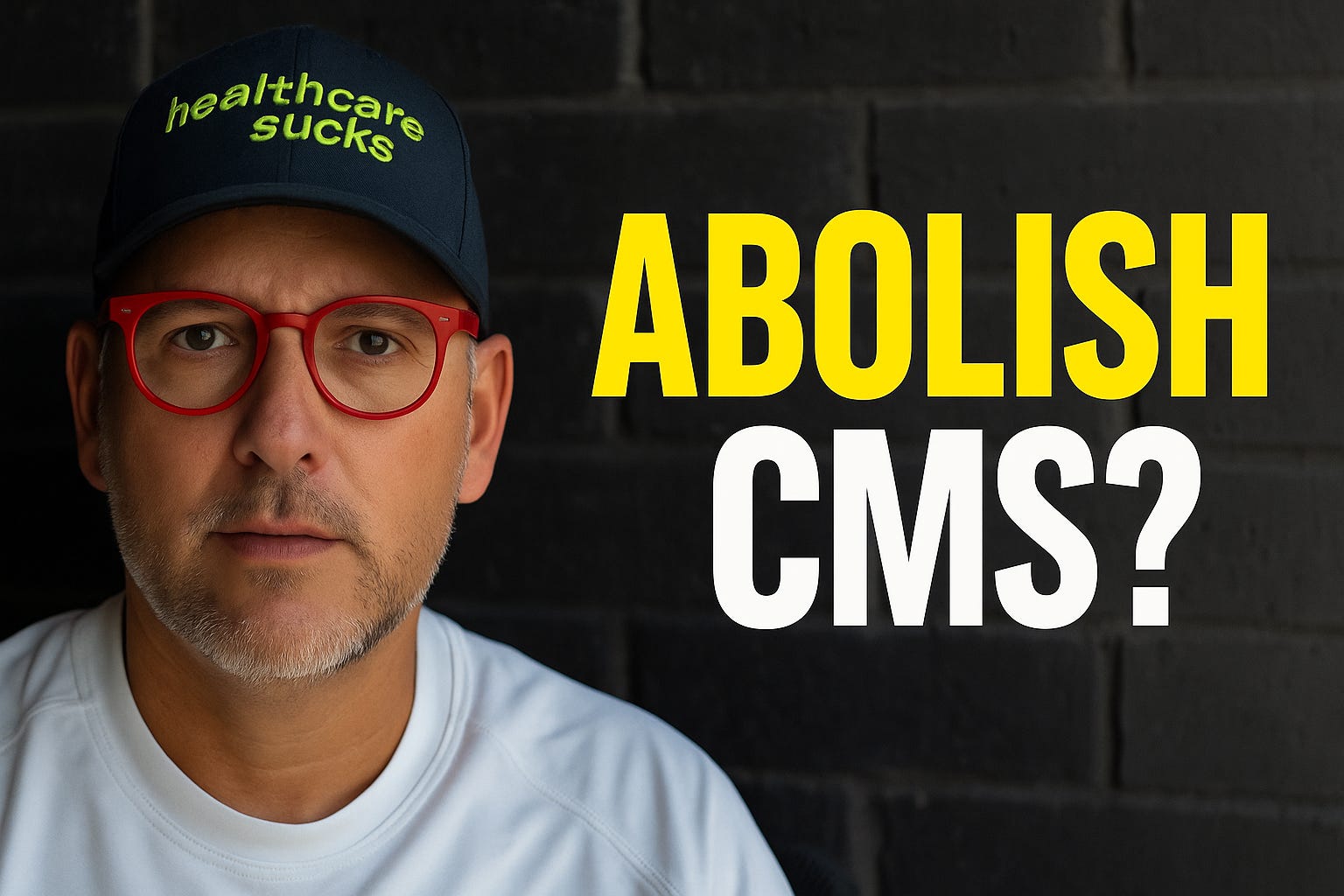
Abolish CMS: The Bureaucracy That Picks Winners and Crushes Physicians
By Dutch Rojas
Every empire has its central planners. Rome had its grain doles. The Soviets had Gosplan. We have the Centers for Medicare & Medicaid Services.
Nearly 7,000 bureaucrats in Baltimore decide what every medical procedure is worth, down to the decimal, for 140 million Americans.
They don’t see patients.
They don’t perform surgeries.
Yet their fee schedules dictate who thrives, who sells out, and who vanishes.
This isn’t a glitch.
It’s the system.
The Rulebook Was Written to Consolidate
Physicians are told they “can’t compete.” That’s false.
They can, but only if they federate, share infrastructure, and build collective scale.
What’s true is this: the rulebook wasn’t written to reward federations of physicians.
It was written to funnel physicians into private equity and health systems.
Every lever pulls the same direction:
Site-of-service differentials make the same procedure worth triple if it’s billed under a health system.
Compliance complexity turns small practices into audit bait.
Opaque pricing keeps employers and patients blind to the spread.
Subsidy flows favor the biggest players, regardless of value.
Call it what it is: a consolidation machine disguised as regulation.
Professional Fees Down, Facility Rents Up
In any sane market, scarce skills—like a surgeon’s hands—command the premium. Instead, the building collects the rent. Professional fees decline in real terms while facility fees rise. That’s not economics. That’s politics, codified in reimbursement tables.
The health system doesn’t have to be better, faster, or safer. It just has to exist. Bureaucrats already wrote its premium into law.
The Transparency Lie
Real transparency would be simple: post every negotiated rate, in plain language, for anyone to see. But CMS doesn’t want transparency; it wants opacity dressed up as reform.
So we get chargemasters that are fiction. Machine-readable files that no one can actually read. “Good faith estimates” that collapse under scrutiny. The farce is deliberate: if the public saw real prices side by side, the whole pricing edifice would crumble overnight.
Why Central Planning Always Ends This Way
It’s been said that no committee can ever know enough to set prices in a complex, living market. Healthcare is no different. Central planning can’t see local costs, new techniques, or what patients value. It can only legislate averages.
And averages become weapons. Health systems with armies of coders and lobbyists turn every tweak into advantage. Independent physicians—unless they band together—are forced to play by rules they never wrote.
The Endgame: Fewer Systems, Fewer Choices
The trajectory is obvious. Unless incentives change, healthcare consolidates into a handful of regional giants. Independent physicians survive only as boutiques or as feeder stock for acquisition. Patients pay more, see fewer choices, and get less say.
Physicians can still fight—but only by federating into coalitions big enough to negotiate directly with employers, set transparent prices, and build their own infrastructure. Anything less is surrender to a rulebook designed to erase them.
The Choice in Front of Us
We can cling to central planning: facility premiums, opaque files, endless audits, and an independence tax on anyone outside a health system.
Or we can tear up the script: equal pay for equal work, real transparency, direct contracts, and markets that reward value instead of scale.
Everywhere else in history, central planning ended in collapse. Healthcare will be no exception. The only question is how much we pay—and how much independence we lose—before we admit the rules were rigged from the start.
Ready to Get Involved!
Frustrated by benefit renewals or property insurance rate hikes?
Whether you’re running a private practice, ASC, or physician-owned health system—we should talk.
Tired of talking to Washington alone?
Join PHA. Physicians deserve a voice in D.C. that doesn’t fold.
Curious about investing in healthcare startups?
The PhyCap Fund was built for physicians who want to own the future—not just observe it.
Want to support the mission?
Buy Dutch a cigar. Visit the Stan Store.
This isn’t a newsletter.
It’s a movement.
Rojas out…


