There’s a 113-Year-Old Clock in the Netherlands That Prices 10 Billion Things a Year. Your Hospital Hopes You Never Hear About It.
It’s called a Dutch auction. It is the cleanest price-discovery machine ever built, and it shows exactly what was taken out of medicine: ownership by producers.

Everyone wants healthcare to “centralize like the Dutch.”
They have the Dutch story exactly backward.
The Dutch did not hand their market to a middleman. They handed it to the people who grow the product.
That is the one thing American healthcare will never allow.
IN TODAY’S ARTICLE
The difference between a market the producers own and a market a middleman owns
Why “centralize healthcare like the Dutch” is the wrong lesson pulled from the right country
How the spread gets captured in flowers (it doesn’t) versus how it gets captured in your care (it does)
The model that already proved transparent pricing and direct contracts can coexist
Glossary at the bottom of today’s article.
A CLOCK THAT COUNTS DOWN
I grew up on Dutch flowers. Long before I built healthcare companies, I knew the smell of a cold storage hall at four in the morning and the sound of a market waking up.
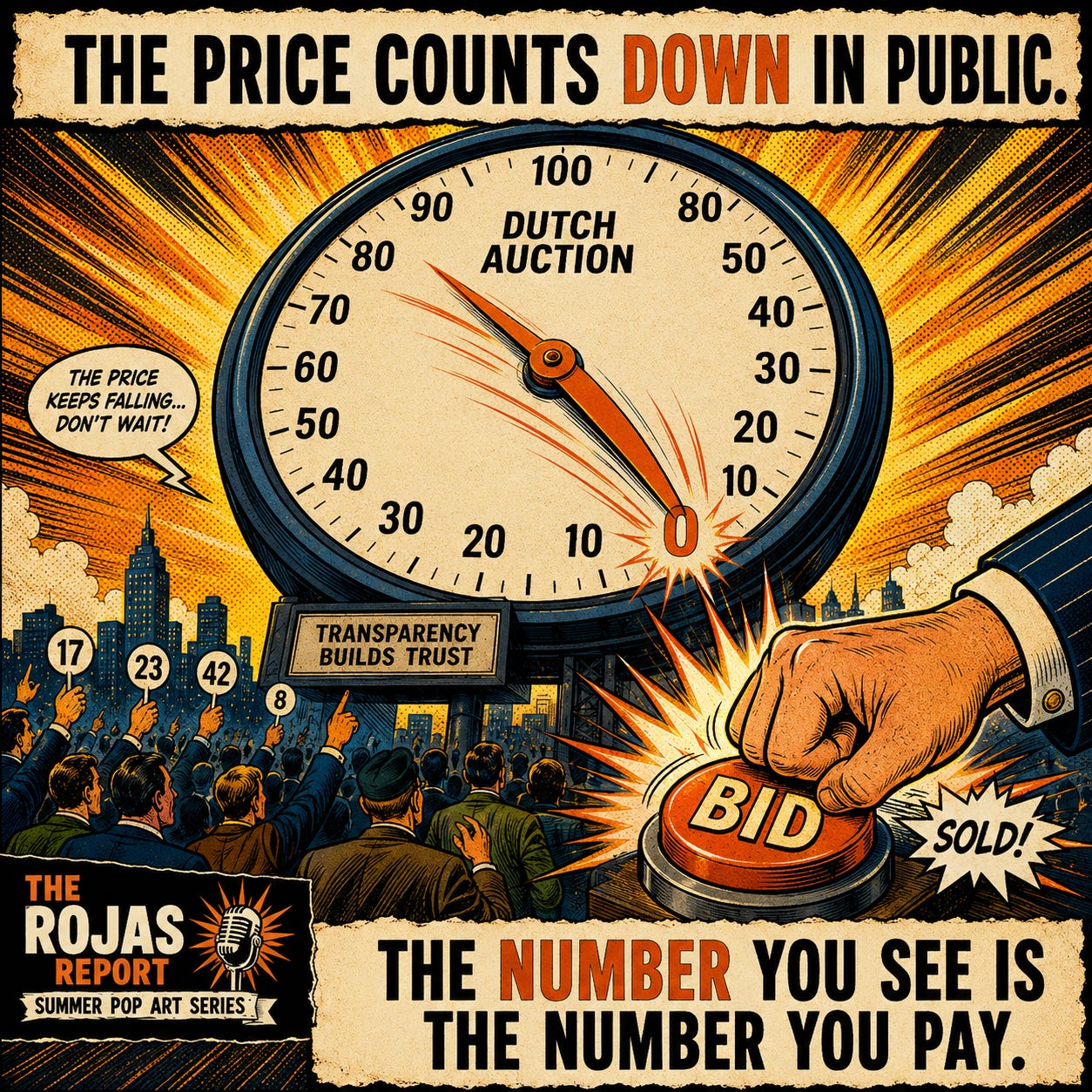
Here is the part most Americans never learn. The largest flower market on earth does not run on haggling. It runs on a clock. The price starts high and falls. The first buyer to press the button wins, at the price showing the instant they press. Hesitate, and you pay more. Wait, and someone takes it.
The Dutch invented this. The world calls it a “Dutch auction” for a reason. The price moves in one direction, in the open, in front of everyone, and the number you see is the number you pay.
Royal FloraHolland is the cooperative that runs it. Roughly 40 percent of the world’s flower and plant exports move through its hubs. In 2023, about 10.5 billion flowers and plants changed owners across its clocks and trade floors.
The Aalsmeer hall is one of the largest buildings on the planet by floor area. The clock there sets a price that wholesalers in Miami quote days later, even for stems that never touch Dutch soil.
Sit with that. A single transparent mechanism in the Netherlands is the reference price for an entire global commodity. That is why the next question matters: why does no equivalent exist for an MRI, a knee replacement, or a vial of insulin?
Now ask the question that matters.
Why does no equivalent exist for an MRI, a knee replacement, or a vial of insulin?
Everyone in healthcare has an opinion about “the Dutch model.”
Almost none of them have looked at the clock.
This is where the receipts live.
WHO OWNS THE CLEARINGHOUSE
Here is the detail the consultants skip when they tell you to copy the Netherlands.
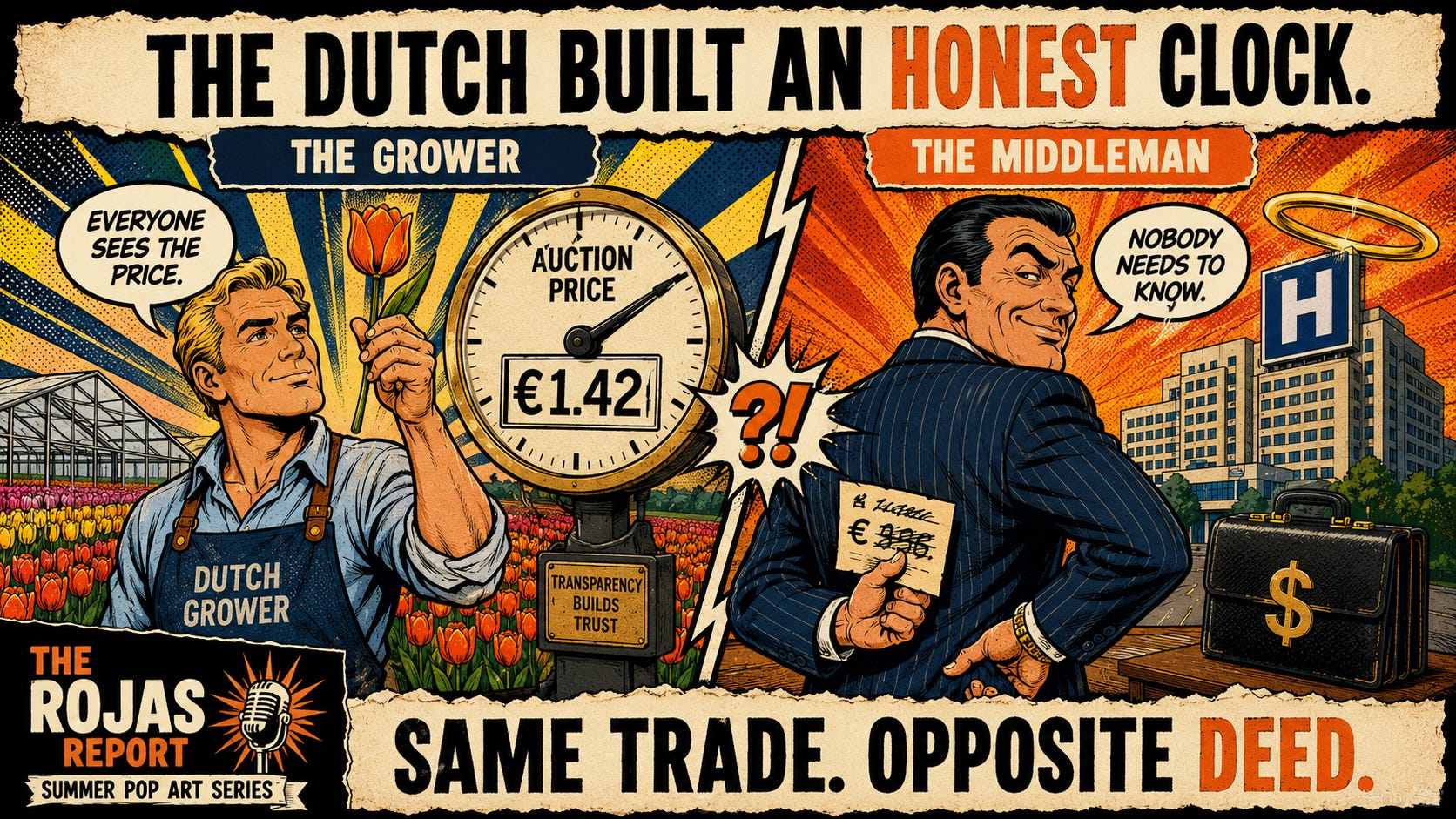
The growers own the auction.
Royal FloraHolland is a cooperative founded in 1912 by Dutch flower growers. Today, a few thousand grower-members own it. The people who produce the product own the marketplace that prices it. The infrastructure answers to them. The clock works for them.
That single fact is the whole game, and it is the fact the establishment buries.
When a McKinsey deck says “centralize healthcare like the Dutch,” it points you at the wrong noun. It wants you to see a big efficient hub and conclude that bigness and centralization are the lesson. They are not. The lesson is ownership.
A central clearinghouse owned by producers serves producers and buyers.
A central clearinghouse owned by a middleman serves the middleman.American healthcare deliberately built the middleman model.
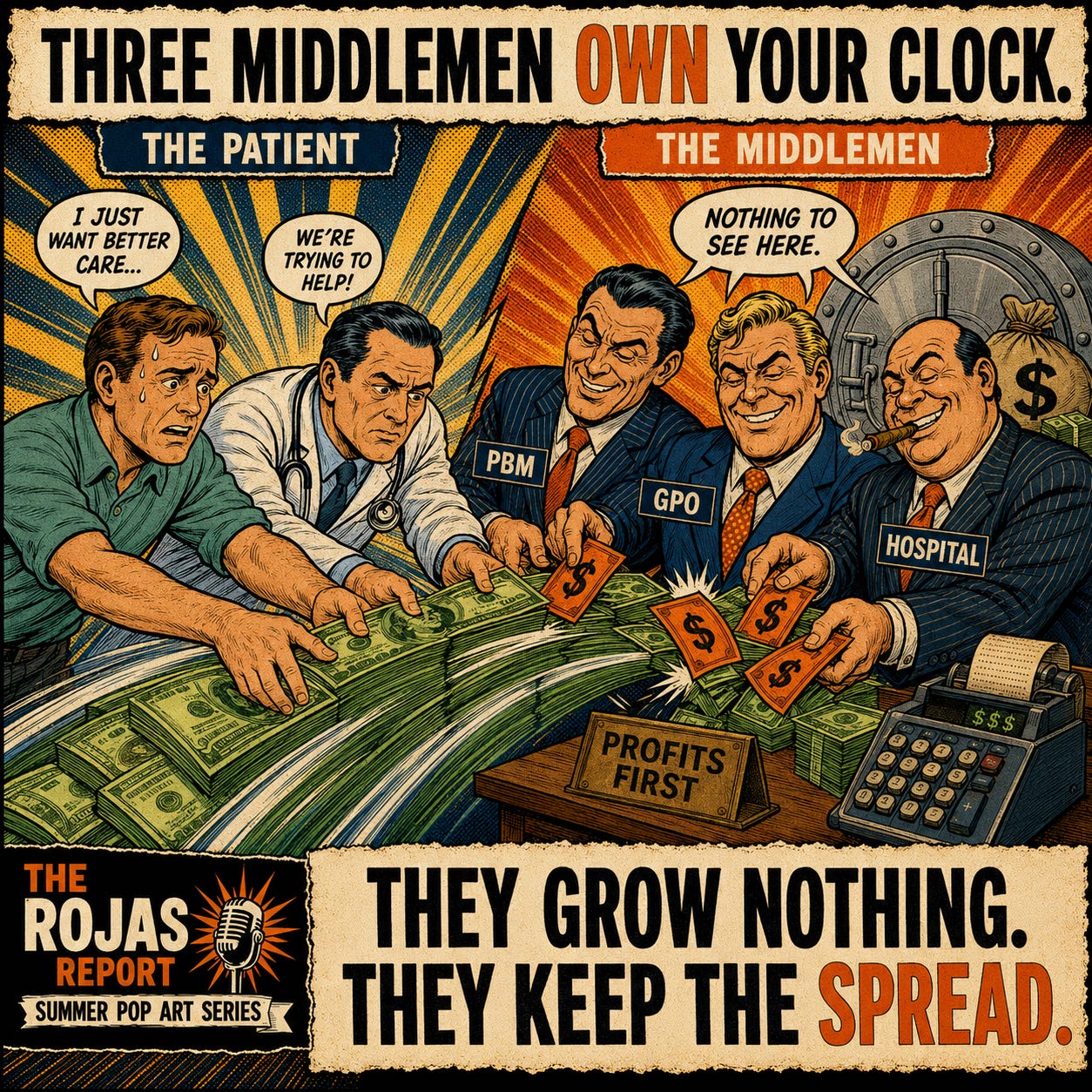
Look at who owns your clock. A pharmacy benefit manager sits between the drug maker and the patient, captures the spread between what it pays and what it charges, and then refuses to publish either number.
A group purchasing organization sits between the supplier and the hospital and collects an “administrative fee” from the very vendors it is supposed to negotiate against, under a federal safe harbor written in 1987 that legalized exactly that conflict.
A hospital system sits between you and a physician and marks the same service up several times over the moment it moves under a hospital tax ID.
None of them grow anything. None of them heal anyone. They own the clock, and the clock answers to them.
The Dutch flower grower maintains the spread because they own the market.
The American physician loses the spread because someone else owns the market. That is not a difference in efficiency.
It is a difference in who holds the deed.