
I Have Been Waiting…
Sunday reflections.

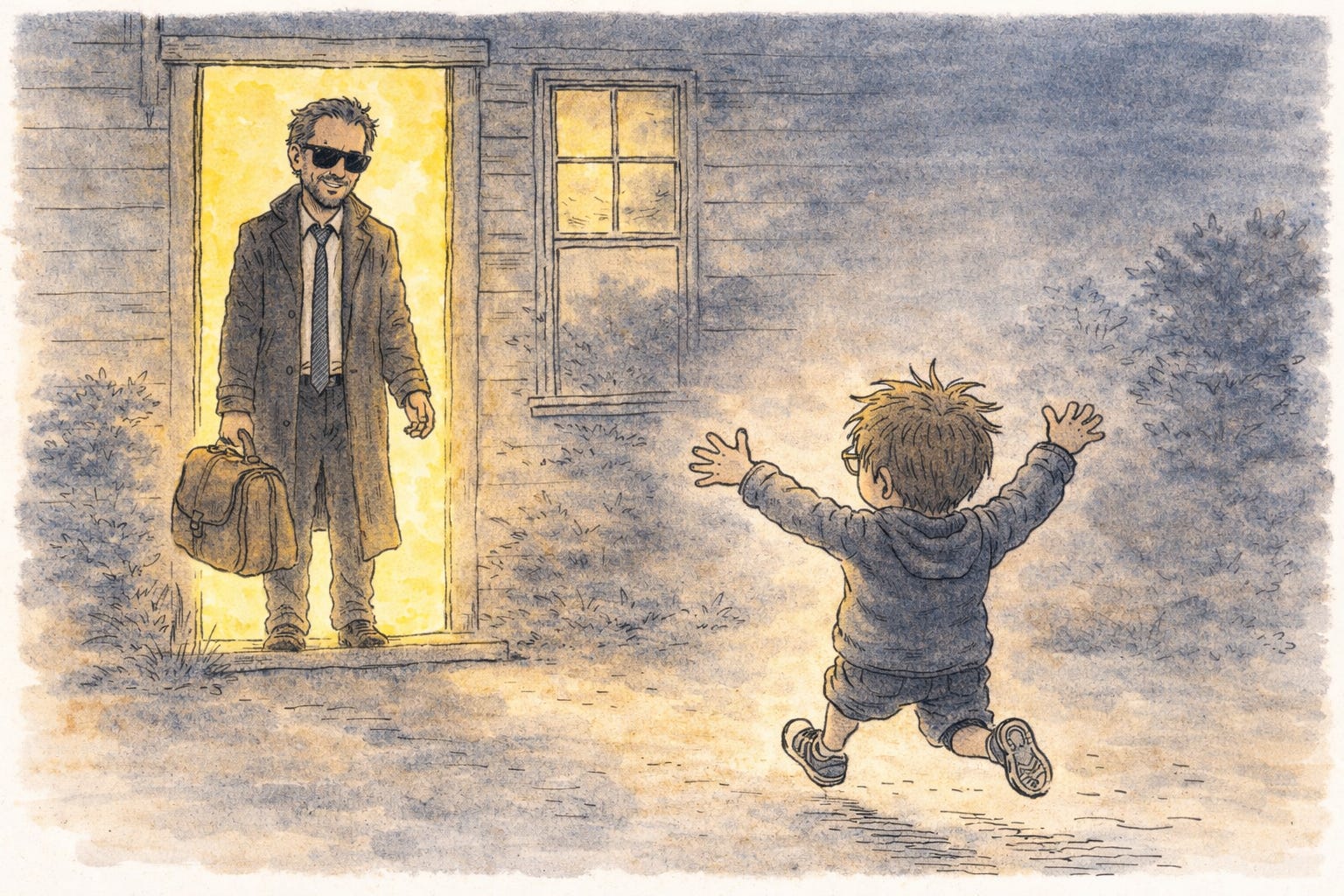
I have been waiting most of my adult life.
Not passively. I am not a passive man. But underneath the work, the building, the momentum, there has always been a quiet assumption that the good feeling was just ahead. One more milestone. One more stabilized season. One more thing handled.
I picked up Rabbi Zelig Pliskin’s work recently and it stopped me cold. Not because it was complicated. Because it wasn’t. Because somewhere in the first few pages I recognized that the thing I have been chasing is not a destination. It is a practice. And I have been avoiding the practice by chasing the destination.
That landed harder than I expected.
The story I tell myself is the world I live in.
Rabbi Pliskin draws on centuries of wisdom to make a case I could not argue with: most human suffering is not caused by circumstances. It is caused by the narrative we build around circumstances. The difficulty is real. The tension is real. The exhaustion is real. But the meaning I assign to those things, the permanence I project onto them, the weight I give them, that part is mine.
I have told myself some version of “this season is just hard” for longer than I want to admit. And there is always a legitimate reason. There is always something that qualifies the hardness. But Pliskin’s question cuts through the justification: what are you telling yourself, and is that the only way to read this?
Faith is supposed to answer that. A man who genuinely believes G-d is neither absent nor indifferent reads difficulty differently. Not as a verdict. As a test. As training. I believe that theologically. I am still learning to believe it on a Tuesday afternoon when things are not working.
I have a good life that I regularly fail to feel.
This is the one that convicted me most.
Habituation. We stop seeing what we have. The people who matter most to us become background. The health, the provision, the relationships we prayed for become invisible through familiarity. And then we wonder why we feel empty.
I walked into my house last week after a hard day and my youngest ran at me from across the room. Full speed. Arms out. Like I was the best thing that had happened to her all day.
I almost missed it. I was still in my head about something that, two days later, I cannot even fully recall.
Gratitude is not a feeling that shows up when conditions are right. It is a decision made against the drift. Made when you are tired. Made when the day was hard. Made again and again until it becomes the thing you reach for first instead of last.
I am not there yet. But I know what direction to walk.
I have been building on an unstable foundation.
My sense of self has been more tied to output than I want to admit. When things are building, I feel good. When things stall, something in me stalls with it. That is not stability. That is a longer delay before the same collapse.
The tradition Pliskin writes from is unambiguous: a man’s worth is not constructed. It is given. Before the first deal, before the first win, before anyone knew his name. The dignity is already there.
I am a slow learner on this one. I keep having to return to it. But every time I do, something settles in me that the next milestone was never going to provide.
A man who leads from that place is different. He can take a hard conversation without flinching. He can fail at something without deciding he is the failure. He can be present with his family without needing them to validate him first.
That is the man I am trying to become.
My kiddos already know something I keep forgetting.
They do not wait. They do not defer joy to a better season. They are fully alive right now, in this moment, in this house, with whatever is in front of them. My youngest does not run at me because I closed a deal. He runs at me because I walked through the door and I am his father and that is enough.
I have spent years treating presence as the reward for finished work. The problem is the work is never finished. There is always one more thing. Which means presence, on that logic, never quite arrives.
Pliskin points out that young children live entirely in the present. They have not yet learned to drag the past forward or borrow trouble from the future. That is not naivety. That is clarity. They understand something about time that I keep losing, that this moment is the only place life actually happens.
The work matters. I am not walking away from it. But I have been lying to myself about the hierarchy. Work is not more important than my kids. Not the deal, not the quarter, not the momentum. None of it outranks the ordinary Tuesday evening where my children are young and I am home and the moment is asking me to show up for it.
That is not a guilt trip. It is just true. I do not have this figured out.
I am writing this as a man who found something worth sitting with and wanted to share it before I talked myself out of its implications.
Pliskin built his life’s work on a simple premise: happiness is a skill, and every man can learn it. The curriculum is gratitude, presence, identity rooted in something permanent, and a willingness to tell yourself a better and truer story about the life you already have.
I am enrolled. Reluctantly at first. More willingly now.
The life I have been waiting to feel is the one I already have. My kids figured that out before they could read. I am catching up.
-Rojas out
This is wonderful, Dutch. Everything you say about yourself matches us too. We need to change! NOW before it's too late. Will we? I don't know. But we'll definitely share this post.
P.S. We remember our own Dad returning home from a job he may not have liked much selling real estate and managing property. But we didn't care what he did at work that day. We were delighted he was home. We also ran at him, arms outstretched to give him a giant hug while yelling "Daddy! Daddy! Daddy!" Remembering those days with gratitude for HIS presence in our lives, gratitude that remains so long after he passed away.
Update: We posted a note about your article here: https://substack.com/@bige47/note/c-231507191
Beautiful, Dutch…I too run the race, stack too much on my plate, am never done, always on, always thinking…I can’t stop it. I know, I tried. But one thing I realized several years ago, kids don’t have a “normal.” Because they don’t think in historical terms or consciously recognize behavior patterns, they accept whatever it is as their normal. They don’t have expectations, at least not in a transactional sense. They expect you to be happy to see them, to be kind, strong, fair, warm and loving. They don’t know what too little is, or too much. To them, if you’re present when you can be, you’re always, just right.